
There is no warning before a medical emergency. Someone is fine one minute and the next they are on the floor, gasping, or not responding when you call their name. Most people freeze at that moment. That is human. But if you have thought about this even once before it happens — what to do, where to go, who to call — you will move faster when it counts.
For families across Mira Road, Mira Bhayandar, Kashimira, and the surrounding western suburbs, knowing where your nearest 24 hour emergency hospital is before a crisis hits is not overthinking. It is just being prepared.
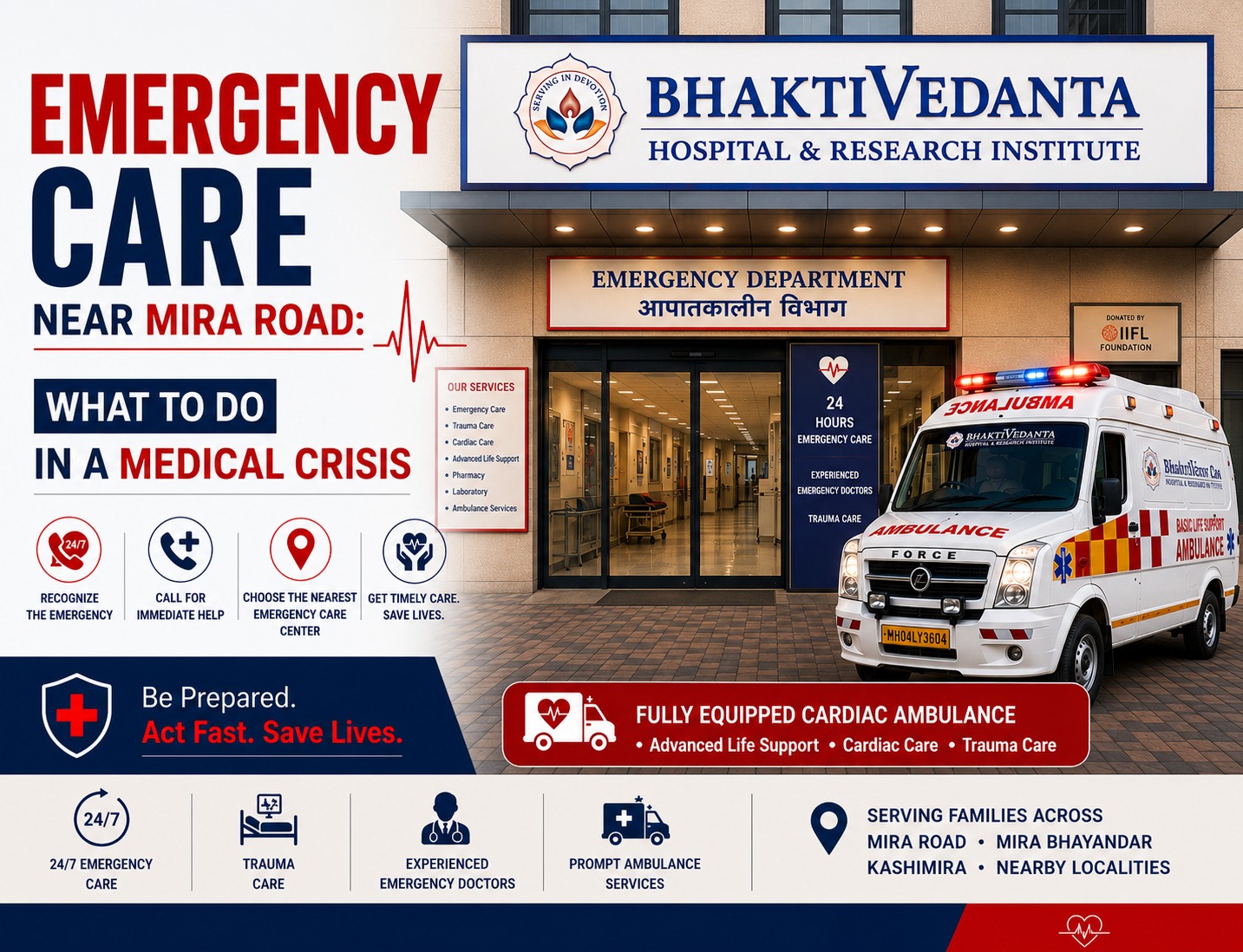
How Do You Know It Is Serious?
When something feels off enough to ask that question, the answer is usually yes.
Chest pain, breathing difficulty, someone who suddenly cannot speak or lift one arm, heavy bleeding, seizures, a serious fall, high fever moving into confusion — none of these are situations where waiting makes sense. In most medical emergencies the outcome is directly tied to how fast treatment begins. That is not an exaggeration. It is just how the body works under crisis conditions.
The First Few Seconds Matter More Than People Realise
Before doing anything else — look. Is the person conscious? Are they breathing? Can they respond to you? Is there visible bleeding?
Ten seconds of clear observation helps you communicate better when you get emergency services on the phone. It also stops you from doing something well-meaning but harmful in a panic — like moving someone with a possible spinal injury.
Call Emergency Services. Do Not Wait.
The moment something looks serious, call for help. Not after trying something at home first. Not after a few minutes of hoping it settles.
When you call — location first, always. Then what happened. Then the person's age and what symptoms you can see. Emergency responders are trained to guide you. Your job is just to get them moving toward you as fast as possible. For cardiac emergencies in the Mira Road area, Bhaktivedanta Hospital's Cardiac Ambulance is reachable at 9321559160. For general ambulance support, call 8879936253. Save both numbers before you need them.
Chest Pain — Never Talk Yourself Out Of Taking It Seriously
This is probably the most commonly delayed emergency in India. It started mildly. It is probably nothing. Maybe it is just acidity.
Pressure or tightness in the chest, pain spreading toward the arm or jaw, sudden cold sweat, breathlessness, feeling faint — any of these together need immediate attention at an emergency hospital. Sit the person down, keep them still and calm, and do not let them walk it off or wait for it to pass. Heart attack first aid begins with not wasting time.
Recognising A Stroke — Use FAST
Stroke symptoms arrive without warning. The FAST method is the fastest way to identify one:
F — Face drooping on one side
A — Arm weakness, cannot raise both evenly
S — Speech slurred or not making sense
T — Time to call emergency services immediately
Do not drive and wait in a queue. Call an ambulance. Stroke treatment in the first few hours determines how much damage is permanent.
Accidents — The Instinct To Move Someone Can Make Things Worse
After a road accident or serious fall, the natural instinct is to lift the person and get them comfortable. Resist it. Spinal injuries do not show from the outside.
Keep them still. Apply steady pressure to any bleeding — do not keep lifting the cloth to check. Wait for trained medical professionals to handle movement.
Burns, Severe Bleeding, Not Breathing
Burns — cool running water for several minutes. Not ice, not toothpaste, not oil. Cover loosely and get to an emergency room.
Severe bleeding — firm pressure, keep it applied, raise the area where possible.
Not breathing — call for help immediately and start CPR if you know it. If you do not know CPR, learning it is genuinely one of the most useful things you can do.
A Little Preparation Helps More Than People Expect
Keep these accessible at home — emergency contact numbers, blood group details, current medications list, and a basic first aid kit. Sounds like overkill until the one moment you actually need it.
FAQ
What should I do first in a medical emergency near Mira Road?
Observe quickly — is the person breathing and conscious. Then call emergency services immediately. Give your location first, then describe what happened and what symptoms you can see. Do not attempt home treatment before making that call.
How do I recognise a stroke quickly?
Use FAST — Face drooping, Arm weakness, Speech difficulty, Time to act. Any one of these signs is enough to call emergency services right away. Stroke recovery is directly tied to how fast treatment begins.
What are the warning signs of a heart attack?
Chest tightness or pressure, pain spreading to the arm or jaw, cold sweating, breathlessness, and sudden dizziness are the key signs. Do not wait for symptoms to worsen — get to a 24 hour emergency hospital immediately.
Should I drive to the hospital or call an ambulance?
For chest pain, stroke symptoms, unconsciousness, or serious injury — call an ambulance. Medical care begins in transit, time is not lost, and the hospital receives information before you arrive. For cardiac emergencies near Mira Road call 9321559160. For general ambulance support call 8879936253.
What to do during heavy bleeding before the ambulance arrives?
Apply firm pressure with a clean cloth and keep it applied. Raise the injured area slightly if possible. Do not repeatedly lift the cloth to check — it interrupts clotting and restarts bleeding.
Is there a 24 hour emergency hospital near Mira Road?
Bhaktivedanta Hospital and Research Institute provides 24/7 emergency care with ICU support, experienced emergency physicians, ambulance services, and a fully equipped Cardiac Ambulance for the Mira Bhayandar Municipal Corporation (MBMC), serving families across Mira Road, Mira Bhayandar, Kashimira, and nearby vicinity.
Back