
Most people have heard the word. Very few actually know what it means. And almost nobody realises there are five different types — each one with a different cause, a different way of spreading, and a completely different set of consequences for the person carrying it.
That is partly why hepatitis remains so underdiagnosed in India. Not because people do not care, but because the picture is genuinely complicated and nobody has sat down to explain it plainly.
So here it is.
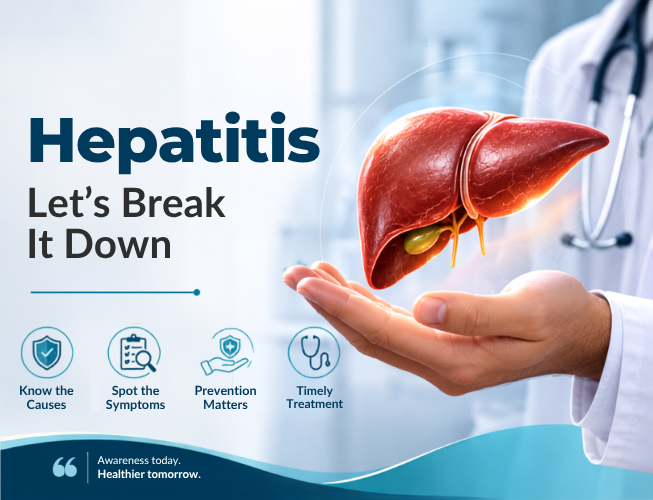
Start With the Basics
Hepatitis means inflammation of the liver. That is it. The word itself just describes what is happening to the organ — not what caused it.
The liver is not a glamorous topic but it is an essential one. It filters the blood, helps digest food, clears toxins, and keeps a remarkable number of processes running quietly in the background. When it is inflamed — for whatever reason — all of that gets disrupted.
The cause matters enormously. Hepatitis can come from alcohol, certain medications, autoimmune conditions, or viruses. Viral hepatitis is what most people mean when they use the word, and that is where things split into five very different stories.
Hepatitis A — The Monsoon One
Contaminated food. Contaminated water. That is how hepatitis A travels. In India, cases spike every monsoon when flooding compromises water supply and street food hygiene drops. Mumbai sees it regularly.
The relatively reassuring thing about hepatitis A is that the body almost always clears it on its own. No chronic phase, no long-term liver damage in most cases. The problem is the weeks it takes to do that — jaundice, exhaustion, nausea, dark urine, complete loss of appetite. It is not dangerous for most people but it is miserable and entirely preventable.
There is a vaccine. Two doses. Works well. Worth getting.
Hepatitis B — The One That Stays
This is where the conversation gets more serious.
Hepatitis B spreads through blood, sexual contact, and from mother to child at birth. Some people clear it within six months. Others do not — and for those people it becomes chronic, sitting in the body quietly for years, sometimes decades, while the liver slowly takes damage it cannot reverse.
Chronic hepatitis B is one of the primary drivers of liver cirrhosis and liver cancer in India. The numbers are not small. And a significant portion of people carrying the virus have no idea because the symptoms, if any, are easy to dismiss or explain away.
Vaccines exist. Highly effective. Part of the national immunisation programme now — but a whole generation grew up before it was routine. If you do not know your hepatitis B status, a blood test is a very simple thing to do. And for those already diagnosed with chronic hepatitis B, effective antiviral treatment is available. While it does not usually eliminate the virus entirely, it suppresses it significantly — reducing the risk of cirrhosis and liver cancer over the long term. Managing it properly changes the outcome considerably.
Hepatitis C — Curable But Still Being Missed
No vaccine for hepatitis C. But — and this is genuinely significant — it is now curable. Eight to twelve weeks of antiviral medication clears the virus in the vast majority of people who take it.
It spreads primarily through blood. Shared needles are the well-known route. Less discussed is inadequately sterilised equipment in medical and cosmetic settings. Like hepatitis B, it tends to be silent for a long time while causing cumulative liver damage.
The frustrating part is that people who do not know they have it cannot access a treatment that would eliminate it. And many of them do not know.
Hepatitis D and E — Briefly
Hepatitis D cannot exist without hepatitis B. It only infects people already carrying B and makes the condition significantly worse. The hepatitis B vaccine protects against both.
Hepatitis E is similar to A — waterborne, usually self-limiting. The exception is pregnancy, where hepatitis E can become genuinely dangerous. In the third trimester specifically, it is associated with severe disease and carries a significant risk of acute liver failure — making it one of the more serious hepatitis variants for pregnant women despite being largely overlooked in general awareness. This one deserves more attention than it gets.
Why This Matters More in India Than People Realise
India carries one of the highest burdens of viral hepatitis in the world. The reasons are not mysterious — vaccination gaps, limited screening access, inconsistent sterilisation practices in some settings, and an organ that compensates quietly for a very long time before it shows obvious signs of distress.
That last point is the most clinically important. The liver does not complain early. By the time symptoms are hard to ignore, damage has usually been building for years. Fatigue that does not lift. Eyes or skin that look slightly yellow. Urine that has gone darker than usual. These are not dramatic warning signs — which is exactly why they get missed.
If something feels off and has for a while — particularly around energy, digestion, or the very specific symptom of yellowing — it is worth investigating. Not next month. Now.
World Hepatitis Day is July 28th every year. A good enough reason to get tested if you never have.
FAQ
What is the difference between hepatitis A, B, and C?
Hepatitis A spreads through contaminated food and water and almost always resolves on its own. Hepatitis B spreads through blood and bodily fluids and can become a lifelong chronic infection causing serious liver damage. Hepatitis C spreads mainly through blood, is often silent for years, but is now curable with a short course of antiviral medication.
Can you have hepatitis without any symptoms?
Yes — and this is what makes hepatitis B and C particularly dangerous. Both can remain completely asymptomatic for years while quietly damaging the liver. Testing is the only reliable way to know your status.
Is hepatitis curable?
Hepatitis A and E resolve on their own in most cases. Hepatitis C is now curable in the vast majority of patients with direct-acting antiviral drugs. Hepatitis B has no cure but can be effectively managed with long-term antiviral therapy to prevent further liver damage.
Which types of hepatitis can be prevented by vaccination?
Hepatitis A and hepatitis B both have safe and highly effective vaccines. There is no vaccine for hepatitis C. The hepatitis B vaccine also provides protection against hepatitis D since D cannot occur without B.
Who should get tested for hepatitis in India?
Anyone who has never been tested for hepatitis B or C, received blood transfusions before 2000, had medical or cosmetic procedures with uncertain sterilisation, or has a family history of liver disease should get tested. For hepatitis B, the test to ask for is HBsAg. For hepatitis C, ask for Anti-HCV — and if that comes back positive, an HCV RNA test follows to confirm active infection. Early detection changes outcomes significantly.