
Nobody really notices their breathing until it becomes a problem. And when it does, the first instinct is usually to explain it away. Too much walking. Too much heat. Probably just stress.
Sometimes that is true. But sometimes it is not — and the difference matters more than most people want to think about while they are still hoping it goes away on its own.
It Does Not Feel the Same For Everyone
Some people describe it as not being able to finish a full breath. Others say their chest feels heavy, like something is pressing down on it. Some just feel wiped out after doing almost nothing — walking to the kitchen, getting dressed, having a conversation that runs a little long.
The pattern that should catch your attention is when things that used to feel ordinary start requiring real effort. That shift, however subtle, is the body flagging something.
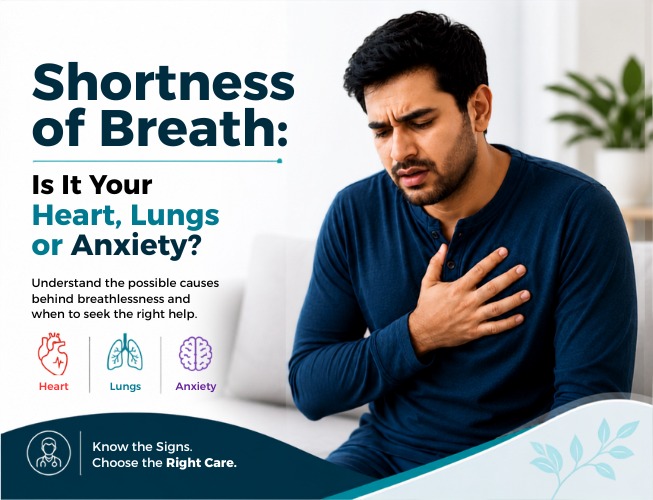
When the Heart Is Behind It
Here is the thing most people do not connect — the heart and the lungs are not separate problems. When the heart is not pumping properly, fluid backs up into the lungs. And then breathing becomes hard. Not uncomfortable. Actually, it's hard.
Heart failure, blocked arteries, high blood pressure, irregular rhythms — any of these can show up first as breathlessness. Before chest pain. Before anything more obvious.
The signs that point toward the heart specifically are worth knowing. Waking up at night unable to breathe properly. Struggling to lie flat without feeling like you cannot get enough air. Feet or legs that swell by the end of the day. A fatigue that sleep does not fix.
And it is worth saying — this is not just something older people deal with. Stress, smoking, barely moving, eating badly, not sleeping — these are showing up in people in their thirties now in ways they were not a generation ago.
When It Is the Lungs
Lung-related breathlessness tends to have a trigger. Cold air. Dust. Exertion. Smoke. Something external usually starts it.
Asthma can flare out of nowhere. COPD builds so slowly people often do not notice until it is already significantly limiting them. Pneumonia arrives with fever and a cough that does not quit. Bronchitis, respiratory infections, post-COVID breathing problems — all of these live in this category.
Living in Mumbai, Thane, or anywhere with heavy traffic and industrial pollution adds another layer. The lungs take a quiet, cumulative hit from years of bad air that does not always show up dramatically until something tips it over.
Wheezing. A cough that will not leave. Chest congestion. Noisy breathing that other people can hear. These point toward the lungs more than anywhere else.
When It Is Anxiety
This one gets dismissed more than it should.
Anxiety does not just live in the mind. During a panic attack, or even just a prolonged stretch of high stress, the body shifts into a state that physically speeds up breathing, tightens the chest, and creates a sensation of not being able to get enough air. That is real. It is not imagined.
The problem is that it looks almost identical to a cardiac or pulmonary symptom from the outside. Chest tightness, racing heart, dizziness, tingling hands — anxiety, heart problems, and lung problems can all produce versions of the same picture.
Which is exactly why guessing is a bad idea.
When To Stop Waiting
Sudden breathlessness with no obvious cause. Chest pain alongside it. Lips or fingertips going bluish. Fainting or near-fainting. These are not situations to monitor at home.
But even without those — breathlessness that keeps coming back, that is slowly getting worse, that is changing what you can and cannot do during the day — that also needs a proper look. Not eventually. Reasonably soon.
What the Doctor Will Actually Do
Because the symptoms overlap so much across all three causes, no single test tells the whole story. An ECG checks the heart's rhythm. A 2D Echo gives a detailed picture of how the heart is actually functioning — its pumping capacity, valve movement, and any structural abnormalities. A chest X-ray shows what is happening structurally in the lungs and chest cavity. Blood tests look for markers of infection or cardiac stress. Lung function tests measure how well air is actually moving. Oxygen monitoring shows what the body is doing with what it gets. And when a cardiac cause is strongly suspected, SOS Angiography may be recommended to assess the coronary arteries directly.
The history matters too — when it started, what makes it worse, whether it happens at rest or only with effort. That context often narrows things down faster than any test alone.
FAQ
What are the most common causes of shortness of breath? Three main categories — heart conditions, lung disease, and anxiety. Within those, heart failure, asthma, COPD, respiratory infections, and panic attacks account for the majority of cases that actually get diagnosed.
Can anxiety genuinely cause physical breathlessness? Yes, and more severely than most people expect. A panic attack or sustained period of anxiety physically alters breathing patterns — speeding them up, tightening the chest, creating real air hunger even when the lungs are working perfectly. It is not psychological in the way people assume.
When does breathlessness need urgent attention? Sudden onset with no explanation, chest pain alongside it, bluish lips or fingertips, fainting or near-fainting — these need immediate care. Breathlessness that is gradually worsening or increasingly affecting daily life also needs medical evaluation, even without the dramatic signs.
Can breathlessness be an early sign of heart disease? Yes — and this is one of the reasons it gets missed. Cardiac breathlessness often appears before chest pain or other obvious heart symptoms. Struggling to breathe while lying flat, waking gasping at night, or breathlessness alongside leg swelling are patterns that specifically point toward the heart.
How do doctors actually figure out what is causing it? Rarely from a single test. An ECG, 2D Echo, chest X-ray, blood tests, lung function tests, and oxygen monitoring together provide a clearer picture. If a cardiac cause is suspected, SOS Angiography may also be recommended to assess the coronary arteries and rule out blockages. Your symptoms—when they started, what triggers them, and whether they worsen while lying down or during activity—help determine which tests to prioritise.
Back