

Every year on November 14th, World Diabetes Day asks people to pause and pay attention to a condition that has quietly become one of India’s most significant health challenges. India is now home to one of the largest diabetic populations in the world — and a substantial portion of people living with type 2 diabetes do not know it yet.
That last part is the problem.
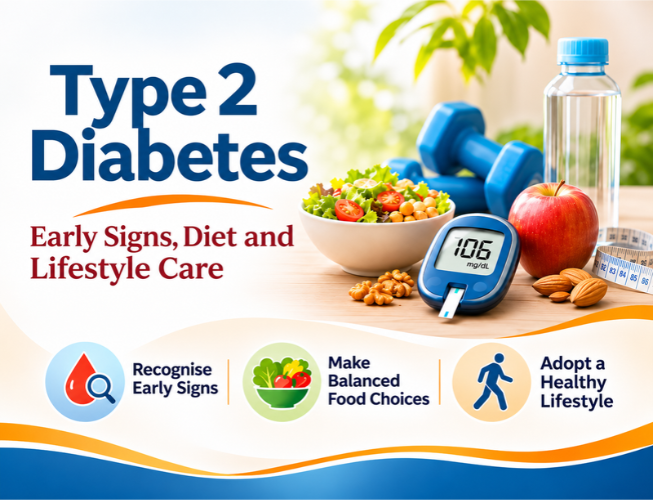
Why Type 2 Diabetes Gets Missed
Type 2 diabetes does not usually arrive with a dramatic warning. It builds slowly, often without obvious symptoms in the early stages, while silently affecting blood vessels, nerves, kidneys, and eyes. By the time most people are diagnosed, the condition has frequently been present for years.
This is why the early signs matter — not because they are dramatic, but because they are easy to explain away.
Early Signs Worth Taking Seriously
Feeling unusually thirsty, more than circumstances seem to warrant. Needing to urinate frequently, particularly at night. Fatigue that does not improve with rest. Vision that blurs slightly and then clears. Cuts or wounds that take longer to heal than they should. Tingling, numbness, or a vague burning sensation in the hands or feet.
Recurrent skin infections or fungal infections — particularly in skin folds or between the toes — that keep coming back. Darkening of the skin around the neck, armpits, or groin, known as acanthosis nigricans, which often signals insulin resistance before blood sugar has even risen to diabetic levels.
None of these in isolation necessarily means diabetes. But several together, or any of them persisting for weeks, is enough reason to get a fasting blood sugar or HbA1c test done. It is not a complicated step. It is a blood test.
The Diet Conversation That Usually Gets Oversimplified
Managing blood sugar through diet is real and effective — but the advice most people receive is too simple to actually follow. Avoid sugar. Avoid rice. That is about as far as the guidance usually goes, and it is not particularly useful.
What actually matters is the glycaemic load of meals — how quickly and how much a particular food raises blood sugar, taking into account both the type of carbohydrate and the quantity. White rice eaten alone raises blood sugar quickly. The same rice eaten with dal, vegetables, and a source of fat behaves very differently in the body. Meal composition matters as much as food choice.
Fibre slows glucose absorption significantly. Vegetables, legumes, whole grains, and pulses — staples of the Indian diet when prepared well — are genuinely useful for blood sugar management. The problem is portion distortion and the displacement of these foods by refined carbohydrates over time.
Eating times matter too. Skipping meals and then eating a large one later in the day creates blood sugar spikes that consistent, smaller meals do not. For many people, simply distributing food intake more evenly across the day produces meaningful improvements in glucose readings.
The specific approach needs to be personalised — by a dietitian who understands the individual’s eating habits, cultural context, and metabolic picture. Generic advice gets ignored. Personalised guidance gets followed.
Lifestyle — The Part Most People Underestimate
Physical activity is probably the most underutilised tool in type 2 diabetes management. Muscle tissue is one of the primary places glucose gets cleared from the blood — and when muscles are active, they absorb glucose independently of insulin. This means exercise directly lowers blood sugar in a way that is immediate and measurable.
It does not need to be intense. Thirty minutes of brisk walking after meals has a clinically documented effect on post-meal blood sugar. Resistance training — bodyweight exercises, resistance bands, light weights — improves insulin sensitivity over time in a way that cardiovascular exercise alone does not.
Sleep and stress are the two lifestyle factors most consistently overlooked in diabetes management. Poor sleep raises cortisol, which raises blood sugar. Chronic stress does the same. Neither is a minor consideration — they are genuinely metabolic factors that affect glucose control as directly as food choices do.
Type 2 diabetes is manageable. For many people, particularly when caught early, it is significantly reversible through sustained lifestyle change. But that requires knowing it is there in the first place.
If you have not had your blood sugar checked recently — particularly if you are over thirty, carry weight around the abdomen, have a family history of diabetes, or recognise any of the symptoms above — World Diabetes Day is a reasonable moment to do it. A fasting blood sugar test or an HbA1c takes a few minutes and tells you exactly where you stand.
Do not wait for symptoms to become impossible to ignore. By that point, the condition has usually been working quietly for years.
FAQ
What is the difference between type 1 and type 2 diabetes?
Type 1 diabetes is an autoimmune condition where the body produces no insulin and requires lifelong insulin therapy. Type 2 diabetes is a metabolic condition where the body either does not produce enough insulin or does not use it effectively — strongly linked to lifestyle factors and significantly more common, accounting for over ninety percent of diabetes cases in India.
What are the earliest signs of type 2 diabetes?
Increased thirst, frequent urination particularly at night, unexplained fatigue, slow-healing wounds, tingling or numbness in the hands or feet, recurrent infections, blurred vision, and darkening skin around the neck or armpits are among the early indicators. Many people have no obvious symptoms at all in the early stages, which is why screening matters.
Which test is best for diagnosing type 2 diabetes?
HbA1c gives a picture of average blood sugar over the previous two to three months and does not require fasting, making it convenient and reliable. Fasting plasma glucose and a postprandial test two hours after eating are also standard. A doctor will advise which combination is most appropriate based on individual circumstances.
Can type 2 diabetes be reversed through diet and lifestyle?
For many people, particularly those diagnosed early or with moderately elevated blood sugar, significant and sustained lifestyle change — weight loss, dietary improvement, regular physical activity — can bring blood sugar into the normal range without medication. This is not universal and depends on how long the condition has been present and other individual factors, but the evidence for lifestyle-driven remission is strong.
How much does exercise actually help with blood sugar control?
Considerably. Physical activity causes muscles to absorb glucose directly, lowering blood sugar independently of insulin. Thirty minutes of brisk walking after meals produces a measurable reduction in post-meal glucose. Regular resistance training improves insulin sensitivity over time. Both types of exercise together give the most complete benefit for blood sugar management.