
Let me tell you how this usually plays out.
Someone goes to the doctor for something routine — a sore knee, a basic health check — and almost as a side note, the nurse checks their blood pressure. The numbers come back a bit high. The doctor says "keep an eye on this." They head home. Three months later, they haven't given it a second thought.
That's not stupidity. That's just how the human brain works. If something isn't causing pain or interfering with your life, it doesn't feel urgent. And untreated hypertension, for years sometimes, produces absolutely nothing you can feel.
No headache. No chest tightness. No warning. Just silence.
In that silence, damage accumulates. Slowly, quietly, across multiple organs — until it can't be ignored anymore. By that point, a lot of it is already done.
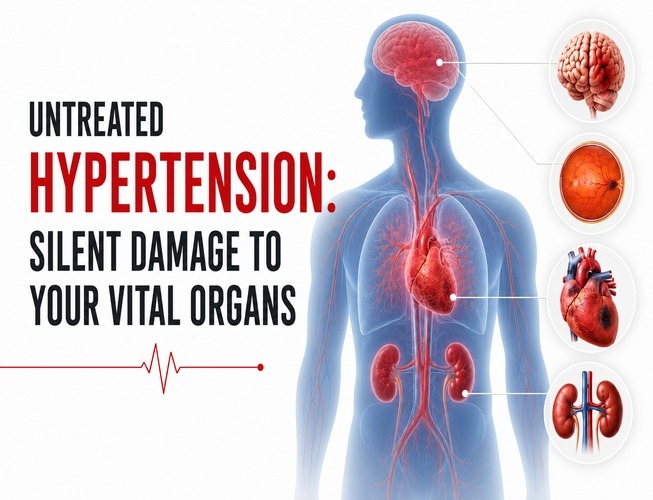
How Untreated High Blood Pressure Damages Your Heart Over Time
Your heart is built to work within a certain pressure range. When blood pressure climbs above that and stays there, the heart pushes harder with every beat — day after day, for years.
The muscle thickens trying to cope. But that thickening isn't strength, it's strain. A stiffer heart fills and pumps less efficiently over time. This is how heart failure develops — not suddenly, but through a slow wearing down that creeps up without warning. Meanwhile, high blood pressure accelerates plaque buildup in the coronary arteries. Those walls are narrow. Add a clot, and that's a heart attack. Blood pressure and heart disease are deeply connected — one reliably sets the stage for the other.
Stroke, Dementia and Memory Loss: What High Blood Pressure Does to Your Brain
The brain needs a constant, stable blood supply. Over years of high blood pressure, the vessels feeding it slowly narrow and stiffen. Blood flow drops. Memory slips. Concentration takes more effort. People blame stress or ageing — sometimes that's right. But chronic high blood pressure is a documented cause of vascular dementia, cognitive decline driven directly by reduced blood supply to brain tissue.
Then there's the more abrupt version. Sustained pressure weakens vessel walls — one ruptures, that's a haemorrhagic stroke. A clot blocks a narrowed vessel, that's an ischaemic stroke. Hypertension is the single biggest modifiable risk factor for stroke in the world. Most of those strokes were, in principle, preventable.
The Hidden Link Between High Blood Pressure and Kidney Disease
The kidneys filter your blood continuously. To do that, they need stable pressure inside their tiny internal vessels. High blood pressure damages those vessels — and damaged kidneys then lose their ability to regulate pressure properly. So pressure stays high, and the kidneys deteriorate further. It's a cycle, and it moves in one direction.
Can high blood pressure cause kidney failure? Yes — and it does, more often than people expect. The endpoint is dialysis or transplant. It takes years of uninterrupted damage to get there — which also means years in which it could have been prevented.
How to Manage High Blood Pressure Before It Becomes a Crisis
The encouraging part is that blood pressure responds well to change. Reducing sodium intake makes a measurable difference. So does regular physical activity — consistent walking, most days, has documented effects. Sleep matters more than most people account for — poor sleep directly raises blood pressure. Managing chronic stress, though genuinely difficult, is one of the more significant lifestyle contributors to sustained hypertension.
Knowing how to lower blood pressure naturally through these habits isn't about avoiding medication. For many people, medication is genuinely needed. It's about not leaving the lifestyle side unaddressed while the tablet does its work.
Most of all — don't wait. These high blood pressure complications take years to develop, which means there are years in which they can be caught, slowed, or prevented entirely. The body stays quiet about the damage it's sustaining. That silence is easy to misread as reassurance.
It isn't. Feeling fine and being fine are two very different things when it comes to blood pressure.
Frequently Asked Questions
What are the long-term effects of untreated hypertension? Left unmanaged, high blood pressure causes progressive damage to the heart, brain, kidneys, eyes, and arteries — including heart failure, stroke, vascular dementia, chronic kidney disease, and hypertensive retinopathy. Because symptoms rarely appear until damage is advanced, these effects accumulate silently for years.
How does high blood pressure cause a stroke? High blood pressure narrows and stiffens the brain's blood vessels over time, reducing blood flow and contributing to cognitive decline. It also weakens vessel walls — a rupture causes a haemorrhagic stroke, a clot blocking a narrowed vessel causes an ischaemic stroke. Hypertension is the leading preventable risk factor for stroke worldwide.
Can high blood pressure cause kidney failure? Yes. Sustained high pressure damages the kidneys' filtering vessels, and damaged kidneys lose their ability to regulate blood pressure — creating a worsening cycle that can progress to chronic kidney disease and kidney failure without management.
How can I lower blood pressure naturally? Reducing sodium intake, regular physical activity, better sleep, and managing chronic stress all make a consistent difference — and work best alongside medication when it's needed, not as a replacement for it.
Back